
Worried IELTS Changed Your Score? The 2026 Marking Error Guide
You open your IELTS result and suddenly the number feels less trustworthy. Maybe your score changed after the test, or you saw a headline about an IEL…
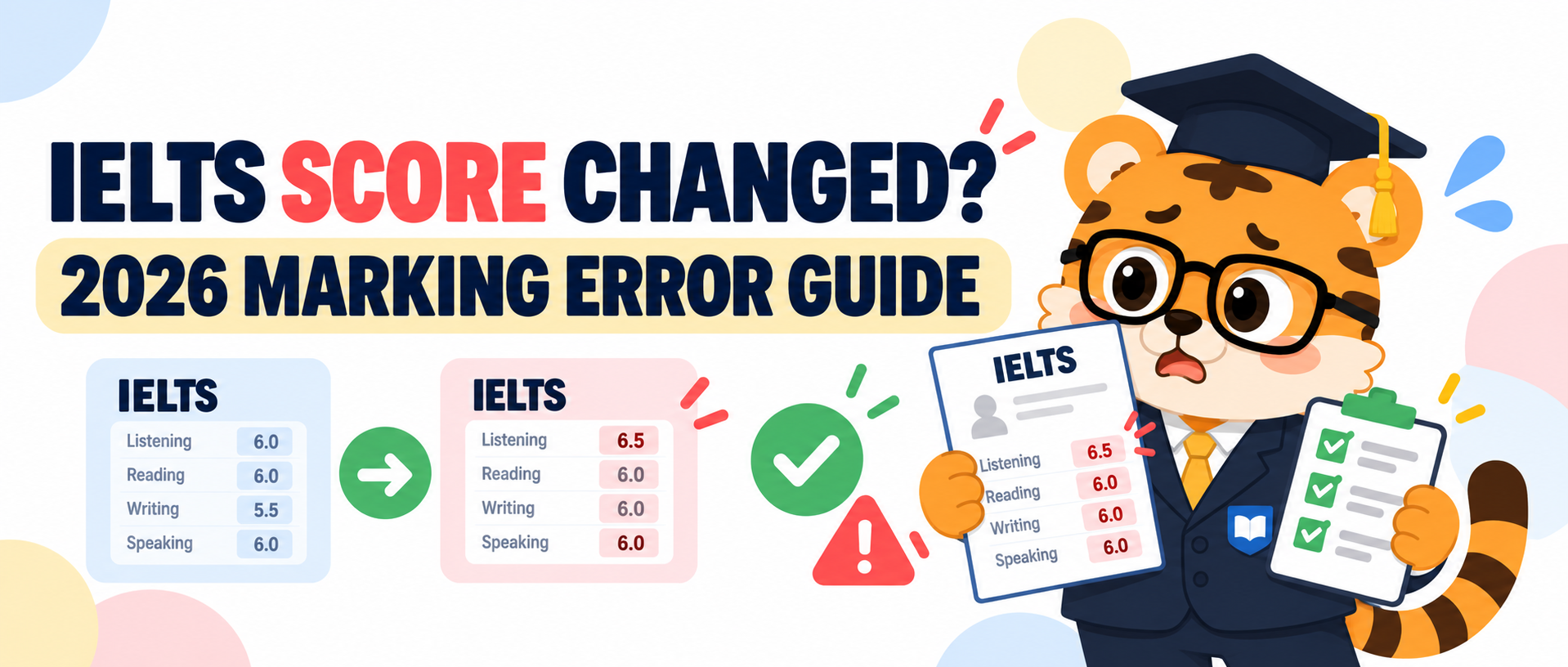
You open your IELTS result and suddenly the number feels less trustworthy. Maybe your score changed after the test, or you saw a headline about an IELTS marking error and started checking an old TRF again. If a university deadline, visa file, or job offer is close, this fear is not small. You may wonder whether your result can be corrected, whether the new TRF is real, or whether you should book another test. The useful answer is to separate the marking incident, the 2026 TRF design update, and your own request for a review. This guide targets searches such as IELTS score changed 2026, IELTS marking error, IELTS result correction, and IELTS TRF validity.
The 2026 IELTS marking incident affected a defined historical period
IELTS reported a marking incident connected with tests processed between 24 August 2023 and 4 September 2025. The official statement says 7,786,614 test instances were processed during that period. Results changed at component or qualification level in 63,216 test instances, affecting 62,794 individual learners. This was real, but it does not mean every learner in that period received a wrong result. Most test instances did not have a reported result change. At qualification level, 21,717 test instances changed, with 20,602 upward changes and 1,115 downward changes. Most upward changes involved a 0.5 overall band adjustment, while every downward change was 0.5 overall band. Check an official message from your test centre or IELTS partner before trusting a group-chat screenshot.
A changed score is different from the new IELTS TRF design
Another 2026 search topic is the updated Test Report Form. From 15 July 2026, IELTS TRFs include the Ofqual logo and the Ofqual qualification title to meet design requirements. This is a document design change. It does not recalculate your band score, change your test type, or reset the validity period. Older and new-format TRFs remain valid for university and visa applications when they are still within the receiver’s accepted period. If you received a TRF between June 2024 and 14 July 2026, you may request an updated version without a fee through the IELTS process. You do not have to request it just because the paper looks different. If you already sent the old TRF, you do not need to resend it only because of the new logo.
The official figures show why visa applicants should check messages carefully
Among the affected tests, 1,108 were related to UK visas. In 279 of those cases, the CEFR level changed. The official statement says four cases involved an incorrect result that affected visa eligibility, and those test takers later retook the exam and met the entrance requirements. This is a small group compared with the total number of tests, but it matters if your visa decision depends on one band or CEFR level. A half-band change can be the difference between submitting now and waiting. Do not use the total percentage to decide that your personal case is safe. Look for a direct message from the centre that administered your test. If your visa application used an affected result, contact the centre and the relevant visa authority through official channels and save every case number.
The safest first response is to verify your result and deadline
Start with a small evidence check. Write your test date, result release date, TRF number, test type, and application deadline. Compare the result in your Test Taker portal with the TRF you submitted. Check that your name and identity document number use the same spelling as your application. If a centre or IELTS partner contacted you, compare the sender and case details before clicking a link. Ask the receiving organisation how it verifies scores. Official IELTS results can be shared through the centre or booking portal, and organisations can verify them through the IELTS Results Service. A phone screenshot or unofficial PDF is not strong evidence, so create one clean record showing which result was used, where it was sent, and when it was valid.
The normal two-year recommendation still matters for IELTS results
IELTS recommends that a result demonstrates English ability for a maximum of two years after the test. Universities, employers, and authorities can have their own rules, so the receiving organisation has the final policy. A TRF design update does not extend this period. Requesting a replacement format also does not reset the clock. Write the test date beside every application deadline instead of trusting a new-looking document. This matters when a correction, complaint, or resit takes time. A result can be accurate and still become too old for one application. If your score expires soon, ask the receiver whether it can accept the current verified result while a review is open. Do not assume an open complaint pauses an admission or visa deadline.
IELTS Enquiry on Results is a review, not the historical correction process
If you simply dislike your band, IELTS offers an Enquiry on Results process. Your test papers can be re-marked by senior Examiners or Markers, and the outcome may leave the score unchanged or change one or more bands. The exact fee, deadline, and available components depend on the test centre and market. Check the centre’s current instructions before paying because old advice in a preparation group may be out of date. This is not the same as being contacted about the 2023–2025 marking incident. The historical incident was handled through a separate correction and redress process. An Enquiry on Results is your own request about a result you received. It is not a guarantee that a low Writing or Speaking score will rise. Compare the band with the exact requirement and the time left before your deadline.
A complaint needs facts about the service or a missed opportunity
A complaint is useful when something went wrong with the test service, result handling, communication, or a potential missed opportunity. IELTS asks test takers to contact the test centre first and to raise concerns as soon as possible. Its complaint procedure says a referred complaint should be acknowledged within five working days and normally receive a full reply within 20 working days. These timings do not promise that a university or visa deadline will move. Keep your complaint short and specific. Include your candidate details, test date, centre, problem, result used, deadline, and requested outcome. Attach evidence instead of sending a long emotional story. If you received a correction notice, quote its case reference. If you lost an offer or paid for a resit, show the payment and the organisation’s written decision.
A resit makes more sense when the score gap is real and the date is tight
Book a new test when your current score does not meet the exact requirement, you are outside a useful review window, or your deadline is too close for a complaint to help. A resit costs money and does not fix a weak skill by itself. Before paying, identify the lowest band and the task causing the loss. “I need a higher score” is not a study diagnosis. Complete one timed task in each skill, review the repeated error, fix one habit, and repeat the same task. For Writing, check whether you answered every part and controlled paragraph purpose. For Speaking, listen for long pauses, unclear endings, and answers without a reason or example. For Reading and Listening, record whether the problem was vocabulary, attention, timing, or careless selection.
Youshow IELTS can turn a score scare into a visible repair routine
If IELTS remains your exam, Youshow IELTS can give you a regular place to practise the four skills and review feedback instead of refreshing your result page. Use the exact test type and target band. Save one issue after each session, such as weak task response, grammar control, spelling, pronunciation, or timing. Repeat a similar task after fixing that one issue and compare the evidence. Practice feedback is a training signal, not an official IELTS result or a correction notice. It cannot tell you whether your historical TRF was included in the marking incident. It can help you decide whether a resit is realistic and where your preparation time should go. If you are moving to computer delivery, practise screen reading and typing in the same routine. The aim is a verified score that meets the receiver’s rule.
YoushowPTE can support a careful exam switch after checking acceptance
Some students see an IELTS problem and immediately want to change to PTE. That can be sensible for a computer-based learner, but the receiving university, visa authority, or professional body must accept the exact PTE version. YoushowPTE can help you test the PTE workflow with repeated practice and AI feedback around pronunciation, fluency, content, grammar, spelling, and timing. Spend a few sessions on the real test tasks before comparing one exciting mock score with your IELTS band. Do not switch only because an online conversion chart looks friendly. IELTS and PTE have different tasks, score reports, and application rules. Check whether your route needs PTE Academic, PTE Academic UKVI, or PTE Core. The official test report, not a practice result, belongs in the final application.
A calm seven-day plan protects you from expensive panic
On day one, collect the TRF, official emails, deadline, and exact score requirement. On day two, contact the test centre if your case may connect to the historical incident. On day three, ask the receiver how a corrected or reviewed result should be submitted. On days four and five, practise the weakest skill under timed conditions and record the same error. On day six, compare the review timeline with a new-test timeline. On day seven, choose the action that leaves you with usable evidence before the deadline. The headline “IELTS score changed” should make you check, not collapse. The 2026 update does not make every old TRF invalid, and the new TRF design does not change a band score. Verify your record, separate a marking-incident notice from an ordinary Enquiry on Results, and retake only with a clear weak-skill plan.
YoushowEdu
Turn information into action
Explore YoushowEdu tools and services that can support your next step.
Explore products →